
Emission control components rarely get attention until a truck loses power, sets a fault code or spends a week in the shop. For commercial fleets, the exhaust gas recirculation system is one of those components. Kenvo Technology supplies fluid service equipment and automotive fluids, including equipment used for diesel EGR fuel machine services. This guide explains how the system works, why carbon builds up, which warning signs to watch for and how fleet managers can plan maintenance in a structured way. It is written for people who manage vehicles, not only for technicians, so the focus is on decisions and trade-offs.
What Is an Exhaust Gas Recirculation EGR System?
The exhaust gas recirculation egr system sends a measured portion of exhaust gas back into the intake, where it mixes with fresh air before entering the cylinders. Exhaust gas contains very little oxygen, so it lowers peak combustion temperatures. Lower temperatures reduce the formation of nitrogen oxides (NOx), a regulated pollutant. The main parts are the EGR valve, the EGR cooler, connecting pipes, sensors and the control software that decides how much gas to recirculate.
How Carbon Buildup Develops
Diesel exhaust carries soot and unburned hydrocarbons. When that gas is recirculated, it mixes with oil vapour and moisture and leaves a sticky film on the valve, the cooler and the intake passages. Over time the film hardens into carbon deposits. These deposits restrict flow, and the valve may stick partly open or partly closed, which upsets the air and exhaust balance the engine expects.
Why Diesel Engines Are Especially Affected
Duty cycle matters as much as mileage. Long idling periods, stop-and-go delivery routes, cold starts and light-load operation all keep exhaust temperatures low. At low temperatures, soot is less likely to burn off and more likely to stick. A highway tractor that runs at steady load usually accumulates deposits differently from a refuse truck or a municipal service vehicle.
Why EGR Condition Matters for Commercial Fleets
A single vehicle with an EGR fault is a repair. A group of vehicles with the same fault pattern is an operational problem. Fleet managers usually see the effects in four areas:
- Unplanned downtime: Emission related faults can trigger reduced power modes that take a vehicle off its route.
- Fuel consumption: Poor combustion conditions can raise fuel use across a season.
- Related components: Excess soot can add load to the diesel particulate filter and other aftertreatment parts.
- Compliance: Vehicles need working emission controls to pass inspections and meet regulatory requirements.
The cost of an emission related fault is often measured in lost days rather than in the repair invoice alone.
Common Warning Signs of an EGR Problem
Drivers often notice changes before a fault code appears. Typical signs include:
- Reduced power or slow throttle response
- Rough idle or occasional stalling
- Black smoke or a noticeable rise in exhaust smoke
- Higher fuel use without a change in route or load
- A check engine light or stored EGR related codes
- Frequent regeneration cycles
These symptoms overlap with other faults, such as injector wear, air intake leaks or sensor failures. A technician should confirm the cause with a scan tool and a physical inspection before any cleaning service is scheduled.
What Is an Exhaust Gas Recirculation Fuel Machine?
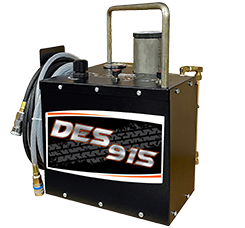
An exhaust gas recirculation fuel machine is service equipment that delivers a cleaning solution to the intake and EGR passages while the engine runs under controlled conditions. It is designed to loosen and remove soft carbon deposits without removing the components from the vehicle. The exact procedure depends on the engine, the equipment and the fluid, so technicians should follow the equipment documentation and the vehicle manufacturer’s guidance.
Exhaust Gas Recirculation Machine Compared With Manual Cleaning
An exhaust gas recirculation machine offers a repeatable process. Manual cleaning requires removing the valve, cooler or piping, which takes more labour hours and carries a risk of damaged gaskets or fasteners. Manual work is still necessary when deposits are hard, when a part has failed mechanically or when a cooler leaks. Machine assisted service is better understood as preventive maintenance than as a repair for damaged parts.
Equipment Listed by Kenvo Technology
Kenvo Technology lists two relevant products for this service. The DEFS-910 Diesel EGR Fuel Service and the DES-915 Diesel EGR Machine Service Canister each have a dedicated product page. Fleets should review the specifications on those pages, and confirm compatibility with their engine types, before selecting equipment.
A Typical Diesel EGR Service Process
Procedures vary, but a well-run service generally follows these steps:
- Scan and record: Read stored codes and note symptoms, mileage and recent repairs.
- Inspect: Check the intake, hoses, clamps and sensors for leaks or damage that cleaning will not fix.
- Connect the equipment: Set up the machine or canister according to the equipment instructions.
- Run the service: Operate the engine at the conditions specified for the procedure and monitor it throughout.
- Verify: Clear codes where appropriate, then check idle quality and operating data.
- Document: Record the date, mileage, fluids used and results in the vehicle file.
Documentation is often skipped, yet it is what lets a fleet compare vehicles and adjust intervals over time.
| Approach | Typical Use | Advantages | Limitations |
|---|---|---|---|
| Machine assisted service | Preventive maintenance and early stage deposits | Repeatable process, no component removal | Does not repair worn or failed parts |
| Manual cleaning | Heavy deposits, stuck valves | Direct access to the components | Higher labour time, more downtime |
| Component replacement | Failed valve, cooler or sensor | Restores function when parts are damaged | Higher parts cost |
Diesel EGR Fuel Machine Canada: Points for Canadian Fleets
Fleets searching for a diesel EGR fuel machine canada suppliers offer should consider local operating conditions as well as equipment features. Cold winters increase idling, since drivers keep engines running to maintain cabin and cargo temperatures, and extended idling encourages soot deposits. Short winter routes keep exhaust temperatures low, and road salt and moisture add to the stress on sensors and connectors.
Regulation is another factor. Canadian on-road emission standards for heavy-duty engines broadly align with United States requirements, and removing or disabling emission control components can breach federal and provincial rules. Maintenance that keeps the original system working is the compliant path, and deleting the system is not an acceptable shortcut. Fleets should also confirm that any service they choose does not conflict with the terms of their engine warranty.
Planning Service Intervals
No single interval suits every fleet. Many service providers reference a range of roughly 50,000 to 100,000 km, but engine manufacturer guidance and observed condition take priority. The table below shows how duty cycle can influence planning.
| Duty Cycle | Deposit Risk | Planning Note |
|---|---|---|
| Long haul, steady highway load | Lower | Follow the manufacturer schedule and monitor data |
| Regional delivery with mixed routes | Moderate | Inspect at regular service visits |
| Urban stop-and-go, refuse, municipal | Higher | Consider shorter intervals and closer monitoring |
| Heavy idling, winter operation | Higher | Track idle hours as well as distance |
Tracking idle hours is often more informative than tracking kilometres for vocational vehicles.
How to Choose Equipment and a Service Partner
A sound selection process looks at more than price. Useful questions include:
- Which engine makes and model years does the equipment support?
- What training and technical documentation come with it?
- How are spare parts and consumables supplied?
- Is local support available when a technician has a question?
- Does the supplier explain what the service can and cannot correct?
Background on the supplier also helps. Reading about Kenvo Technology gives fleets a clearer picture of the company’s range of service equipment and fluids before they compare options.
Best Practices for Long Term EGR Health
Equipment is only one part of the plan. Fleets that keep EGR systems in good condition usually combine several habits:
- Use fuel and oil that meet the engine manufacturer’s specifications.
- Reduce unnecessary idling through driver training and telematics.
- Allow regeneration cycles to complete instead of interrupting them.
- Investigate fault codes early instead of clearing them repeatedly.
- Keep a service log for each vehicle and review it quarterly.
These steps cost little and improve the results of any cleaning service.
Conclusion
The EGR system is small compared with the rest of a diesel engine, yet its condition affects power, fuel use, emissions and uptime. Diesel EGR fuel machine services give fleets a practical way to remove early carbon deposits without disassembling components, provided the service is matched to the engine, the duty cycle and the manufacturer’s guidance. Fleets with questions about equipment options or compatibility can contact us to discuss their requirements with the team.
Frequently Asked Questions
What do diesel EGR fuel machine services do?
They deliver a cleaning solution to the intake and EGR passages while the engine runs, which helps loosen and remove carbon deposits without removing components from the vehicle.
How often should a fleet vehicle be serviced?
It depends on the engine, the duty cycle and the manufacturer’s recommendations. Vehicles that idle heavily or run short urban routes usually need more frequent attention than highway tractors.
Can machine assisted service fix a failed EGR valve?
No. It is intended for deposit removal and preventive maintenance. A valve that has failed electrically or mechanically, or a cooler that leaks, needs repair or replacement.
Is removing the EGR system a legitimate alternative?
No. Removing or disabling emission control equipment can violate federal and provincial regulations and may affect warranty coverage. Proper maintenance is the compliant approach.