
There is a problem quietly working against the profitability of diesel fleets everywhere — and most fleet managers do not recognise it until the damage has already accumulated. It does not trigger an immediate fault light. It does not cause a sudden breakdown. It simply chips away at fuel economy, increases stress on expensive components, and shortens vehicle service life — incrementally, invisibly, day after day.
The cause is carbon build-up inside the diesel EGR (Exhaust Gas Recirculation) system. The solution — professional EGR system cleaning — is far more accessible and cost-effective than most fleet operators expect. This guide explains what is happening inside your vehicles, what it is truly costing you, and what you can do about it today.
The EGR System: Critical Engineering With a Critical Weakness
Modern diesel engines depend on the EGR system to manage combustion temperatures and keep nitrogen oxide (NOx) emissions within regulatory limits. By recirculating a controlled portion of exhaust gases back into the intake manifold, the EGR system reduces peak combustion temperatures — an elegant solution that has become standard across the commercial diesel industry.
But exhaust gases are not clean. They carry carbon particles, soot, oil mist, and combustion by-products from every firing cycle. Each recirculation pass deposits a small amount of this material onto EGR valves, coolers, intake manifold walls, and connected ducting. The deposits are thin at first — invisible to any diagnostic system. Over time, they accumulate into thick, hard layers of carbon that progressively restrict flow, insulate heat exchange surfaces, and interfere with the precise operation of electronically controlled components.
The engine management system attempts to compensate — adjusting fuel delivery, injection timing, and boost pressure to maintain performance. Those compensations mask the problem in the short term while making it worse in the long term, burning more fuel and placing additional stress on components that are already working harder than they should.
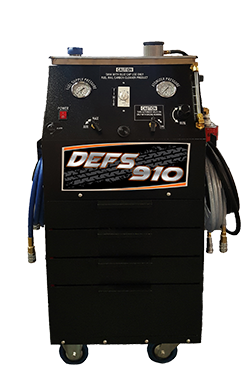
Kenvo’s diesel EGR fuel services address this problem at the source, using professional equipment specifically engineered for commercial diesel applications.
The Cascade Effect: One Dirty Component, Many Expensive Consequences
One of the most important things to understand about EGR contamination is that it never stays contained to a single component. The contamination cascades through connected systems, triggering a chain reaction of performance degradation and component wear that, left unaddressed, eventually produces a series of expensive repair bills.
Here is how the cascade typically unfolds in a diesel truck or bus with a heavily contaminated EGR system:
- Stage 1 — EGR Valve Restriction: Carbon deposits cause the EGR valve to operate imprecisely or stick in a partially open or closed position. The engine management system detects abnormal recirculation rates and compensates with adjusted fuelling and timing — consuming more fuel and generating more exhaust soot.
- Stage 2 — EGR Cooler Degradation: Soot accumulation on cooler surfaces reduces heat exchange efficiency. Intake charge temperatures rise, reducing combustion efficiency further and increasing thermal stress throughout the combustion chamber.
- Stage 3 — Intake Manifold Restriction: Carbon deposits narrow intake passages, restricting the airflow available for combustion. The engine compensates with richer fuelling, directly and measurably increasing fuel consumption.
- Stage 4 — DPF Overloading: The increased soot production from Stages 1 through 3 accelerates DPF loading, triggering more frequent active regeneration cycles. Each regen cycle consumes significant additional fuel and generates intense heat that degrades the DPF substrate over time.
- Stage 5 — VGT Turbo Contamination: Soot from the compromised EGR and intake system coats variable turbo vanes, reducing boost pressure and throttle response. This further reduces combustion efficiency and may produce fault codes requiring diagnostic attention.
Each stage in this cascade represents both an ongoing operating cost penalty and an increasing risk of sudden component failure. When one component finally reaches its failure threshold — whether the EGR valve, the cooler, the DPF, or the turbo — the repair cost can run from hundreds to thousands of dollars, and that figure excludes the lost revenue from the vehicle being off the road.
Why Fuel Economy Degradation is the Most Expensive Symptom You Are Not Tracking
Of all the consequences of EGR contamination, gradual fuel economy degradation is simultaneously the most financially significant and the most easily missed. Unlike a fault code or visible symptom, declining fuel economy creeps in over months. It is easy to attribute to route changes, load variations, seasonal fuel quality differences, or driver behaviour — and without systematic tracking, it often goes unrecognised until it is severe.
This is why rigorous fuel consumption monitoring is one of the most valuable tools available to fleet managers. A truck that was returning 5.5 MPG twelve months ago and is now averaging 4.8 MPG has likely accumulated significant EGR system contamination. It is costing its operator meaningfully more per kilometre than it should — every single day it is on the road without being serviced.
Restoring that vehicle to its baseline fuel economy through a $150 EGR cleaning service delivers an immediate, quantifiable return. For a vehicle covering 100,000 km per year, even a 0.5 MPG improvement translates into hundreds of dollars in annual fuel savings — many times the cost of the service. For a fleet of 20 or 50 vehicles, those savings compound into a significant annual impact on operating margins.
Kenvo also offers power steering machine services and radiator coolant service that, when combined with regular EGR maintenance, address a broad range of fluid systems affecting fleet efficiency and component longevity.
The True Cost Comparison: Cleaning vs Repairing
To understand why proactive EGR cleaning is one of the most compelling maintenance investments available to fleet operators, it helps to compare the cost of cleaning directly against the cost of the component failures it prevents:
- EGR system cleaning: Approximately $150 per vehicle
- EGR valve replacement: $300 to $1,500+ including labour — often triggered by carbon-induced sticking
- EGR cooler replacement: $800 to $3,000+ — one of the most expensive common diesel failures
- DPF cleaning (professional): $300 to $600 per service, required more frequently when EGR is contaminated
- DPF replacement: $1,500 to $4,000+ — heavily influenced by soot load from EGR system health
- VGT turbo replacement: $1,500 to $5,000+ including labour — risk elevated by EGR contamination
The mathematics are clear. Preventing a single EGR cooler replacement through proactive cleaning pays for that cleaning service on 10 to 20 vehicles simultaneously. When fuel savings are added to the equation, the return on investment is compelling by any measure.
Kenvo’s automatic transmission service and brake flush machine service follow the same preventative logic — small, scheduled service costs that reliably prevent far larger unplanned repair expenses.
Warning Signs: How to Identify EGR Contamination in Your Fleet
While proactive scheduled cleaning is always preferable, fleet managers and drivers should also know the symptoms of active EGR contamination. Early identification allows service to be scheduled before cascade damage occurs:
- Declining fuel economy — gradual and not attributable to route, load, or seasonal factors
- Black or dark grey exhaust smoke — indicating incomplete combustion and likely intake or EGR restriction
- Rough idle or hesitation under load — often caused by an EGR valve sticking open or closed due to carbon build-up
- Reduced power or sluggish throttle response — suggesting turbo restriction or compromised intake airflow
- Frequent DPF regeneration cycles — visible through in-cab warning lights or fleet telematics data; a strong indicator of elevated soot production upstream
- EGR-related fault codes — often meaning the system has been degraded for some time before triggering a diagnostic alert
Any vehicle showing two or more of these symptoms and not having had recent EGR maintenance should be prioritised for service. The longer contamination is allowed to persist, the greater the risk of cascade failure and the higher the eventual repair cost.
Building a Proactive EGR Maintenance Programme for Your Fleet
The most cost-effective diesel fleet maintenance programmes are built around prevention rather than repair. EGR cleaning delivers maximum value when it is scheduled proactively — before symptoms emerge — as part of a structured maintenance programme rather than triggered by a fault.
A recommended framework for most commercial diesel fleets:
- Every 50,000 to 100,000 km: Schedule EGR system cleaning for all vehicles
- Annually: Review fuel economy data per vehicle against historical baseline; flag any showing greater than 5% degradation for priority EGR service
- At every major service: Inspect for EGR-related fault codes, even if not illuminated in-cab, and address proactively
- When integrating new vehicles: Establish a baseline fuel economy record at acquisition to enable accurate degradation tracking over time
For fleet maintenance operations looking to implement Kenvo services at scale, the distributors page provides information on accessing equipment and services through authorised channels. Financing options are available for operations investing in their own service equipment.
Frequently Asked Questions
Q1: My trucks are not throwing any EGR fault codes. Does that mean the EGR system is clean?
Not necessarily. EGR fault codes typically only appear once contamination has reached a point where the engine management system detects operation outside acceptable parameters. Significant carbon build-up and fuel economy degradation can occur well before any fault code is triggered. This is why proactive cleaning at scheduled intervals — rather than fault-reactive maintenance — is so important.
Q2: How long does a professional EGR cleaning service take, and does it require the vehicle to be off the road for long?
A professional EGR cleaning service typically takes between 1 and 3 hours per vehicle, depending on the vehicle type and the level of contamination. For most fleet applications, the service can be completed during a scheduled maintenance window without requiring additional downtime. Kenvo’s equipment is designed for deployment in fleet maintenance environments where minimising vehicle-off-road time is a priority.
Q3: Can EGR cleaning reduce DPF regeneration frequency?
Yes, in most cases significantly. The majority of excessive DPF regeneration is caused by elevated soot production upstream — and a contaminated EGR system is one of the primary contributors to that elevated soot output. Cleaning the EGR system reduces the soot load entering the DPF, directly extending regeneration intervals and reducing the fuel consumption associated with active regen cycles.
Q4: Is EGR cleaning suitable for high-mileage vehicles, or is it only effective on newer trucks?
EGR cleaning is effective across the full range of vehicle ages and mileages. In fact, high-mileage vehicles with accumulated carbon deposits often show the most dramatic improvements in fuel economy and performance following cleaning. The key consideration for high-mileage vehicles is ensuring that any pre-existing component damage — such as a cracked EGR cooler or worn valve — is identified before service so it can be addressed simultaneously.
Q5: How does EGR cleaning interact with other diesel maintenance services?
EGR cleaning works best as part of a comprehensive preventative maintenance programme. When combined with fuel system combustion service, engine flush service, and scheduled differential fluid service, it contributes to a holistic approach that addresses all major fluid and combustion systems — minimising total maintenance costs and maximising fleet reliability.
Q6: Where can I find out more about Kenvo’s EGR and diesel maintenance services?
Full details on Kenvo’s range of diesel maintenance equipment and services are available at www.kenvo.com. For specific enquiries about fleet programmes, service schedules, or distributor arrangements, use the contact page to speak with Kenvo’s team directly. You can also explore Kenvo’s diesel EGR fuel service product page for full technical details on available equipment and service options.
Conclusion
Carbon build-up in diesel EGR systems is not a dramatic failure mode — it is a slow, silent erosion of fleet profitability. It costs you in higher fuel bills. It costs you in accelerated component wear. It costs you in DPF replacement cycles that arrive too early. It costs you in unscheduled breakdowns and the revenue losses that come with them. And it does all of this quietly, without a fault code or a visible symptom, until the damage is already done.
A $150 professional EGR cleaning service breaks that cycle. It restores fuel economy, reduces component stress, and delivers a measurable, compounding return on investment that improves with every vehicle serviced and every kilometre driven.
The question is not whether EGR cleaning is worth the investment. The data makes that clear. The question is how much your fleet has already lost — and how quickly you can start recovering it. Visit Kenvo’s diesel EGR fuel services page to get started.